
09 Jan Who Should Own Your MDM? Defining Master Data Management in Epicor and Infor Environments
Who Should Own Your Master Data Management (MDM)?
The Evolving Role of Data Management Ownership
Every organization that adopts a Master Data Management (MDM) strategy eventually faces the same question: who owns it?
MDM ownership is not about who maintains databases or manages integrations. It is about who is accountable for enterprise data management—ensuring that master data such as customers, products, suppliers, pricing, and locations is accurate, governed, and aligned with business operations.
Too often, master data management is treated as a purely technical initiative and assigned to IT or data engineering teams. While technical stewardship is essential, MDM is fundamentally a business-driven data management discipline that supports ERP reliability, analytics accuracy, regulatory compliance, and customer experience.
What Defines a Strong MDM Owner
A successful Master Data Management owner is someone who:
Understands how master data supports end-to-end business processes across finance, operations, sales, supply chain, and analytics.
Recognizes the downstream impact of poor data management on ERP transactions, EDI workflows, reporting, and customer-facing systems.
Translates business requirements into MDM standards, data governance rules, and operational workflows.
Aligns business stakeholders and technical teams around shared data quality objectives.
Oversees the full master data lifecycle, from creation and validation to enrichment, synchronization, and retirement.
When these capabilities are in place, master data management becomes a strategic enabler rather than an operational burden.
Why MDM Ownership Matters in Epicor and Infor Environments
For organizations running Epicor ERP or Infor CloudSuite, clear ownership of master data management is critical. These platforms depend on consistent, governed master data to support order processing, pricing accuracy, customer records, supplier management, and financial reporting.
Without defined data management ownership, organizations commonly experience:
Duplicate or inconsistent customer and supplier master records
Conflicting pricing, terms, and hierarchies across systems
Broken integrations between ERP, EDI, analytics, and downstream platforms
Manual data correction that undermines confidence in enterprise data
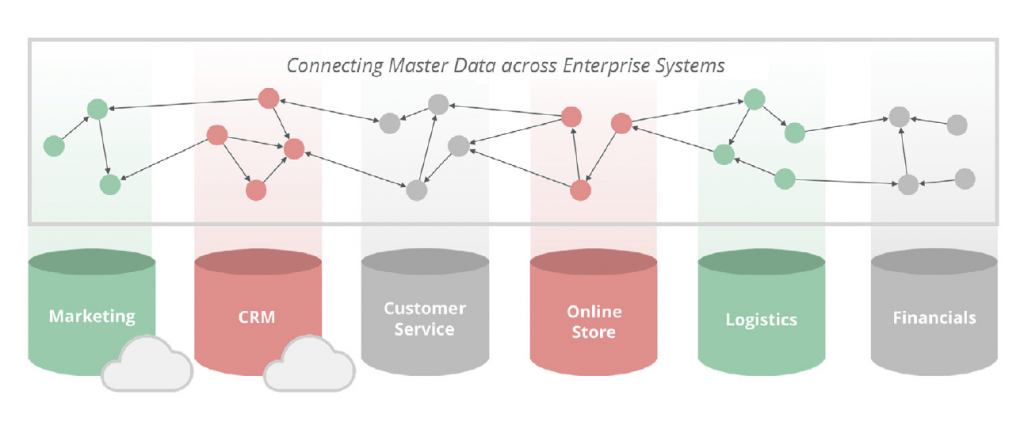
A designated MDM owner ensures that master data flows reliably across ERP, EDI, reporting, and digital ecosystems—maintaining a trusted system of record.
Where MDM Ownership Typically Resides—and the Tradeoffs
In many organizations, master data management ownership sits in one of four areas:
IT or Enterprise Data Teams bring technical rigor and integration expertise, but may lack business context.
Operations or Finance prioritize transactional accuracy and compliance, though their focus may be domain-specific.
Sales or Customer Operations understand customer master data impact, but may not enforce enterprise-wide data standards.
Analytics or Enterprise Architecture value consistency and reporting integrity, but may be removed from day-to-day data creation.
Each group plays a role in data management, but none should own MDM in isolation.
Where MDM Ownership Typically Resides—and the Tradeoffs
Modern distributors and manufacturers are increasingly adopting a hybrid ownership model.
In this setup:
A Product Manager owns the strategic layer of the PIM: defining categories, product variations, and the customer-facing message.
A PIM Coordinator or Digital Operations Lead owns the governance and workflow layer,; ensuring that data is accurate, approved, and syndicated properly.
A cross-functional governance team (marketing, product, IT, eCommerce) meets regularly to review product data quality, channel performance, and system alignment.
This shared ownership ensures that PIM is both technically sound and commercially effective.
The Hybrid MDM Ownership Model: A Best Practice
Modern organizations increasingly adopt a hybrid master data management ownership model that balances business accountability with strong data governance.
In this model:
A Business Data Owner defines master data standards, definitions, and usage policies.
An MDM or Data Governance Lead manages stewardship workflows, approvals, and data quality enforcement.
IT and Integration Teams ensure systems, APIs, and data pipelines remain aligned and scalable.
A cross-functional data governance council regularly reviews data quality metrics, change requests, and enterprise impact.
This approach ensures master data management supports both operational execution and strategic decision-making.
Master Data Management Is the Foundation of Data Trust
When managed effectively, MDM becomes the backbone of enterprise data management and organizational trust.
When ownership is unclear, the consequences are consistent:
Conflicting dashboards and reports
Increased manual reconciliation and rework
Delayed ERP initiatives and digital transformation projects
Elevated risk in audits and regulatory compliance
Strong MDM ownership establishes a single source of truth that the business can rely on.
Core Responsibilities of an MDM Owner
High-performing master data management owners are accountable for:
Data Standards and Definitions
Establishing consistent definitions and hierarchies for customers, products, suppliers, and other master data domains.
Data Governance and Stewardship
Defining who creates, reviews, approves, and maintains master data.
Data Quality Management
Monitoring accuracy, completeness, duplication, and conformity across systems.
System and Integration Oversight
Ensuring alignment between ERP (Epicor or Infor), EDI, analytics, and downstream platforms.
Change and Lifecycle Management
Managing the impact of acquisitions, system upgrades, and evolving business rules.
Performance Measurement
Tracking improvements in data quality, operational efficiency, and business outcomes.
Common Master Data Management Pitfalls to Avoid
Even mature organizations struggle with MDM when:
Data management initiatives lack executive sponsorship
Governance exists on paper but is not enforced
Business teams view MDM as an IT-only responsibility
Tools are deployed without clear ownership or process design
Data quality metrics are not visible or actionable
These challenges are rarely technical failures—they are data management ownership failures.
Is Your Master Data in the Right Hands?
Ask yourself:
Is there a clearly accountable owner for each master data domain?
Are data management standards consistently applied across Epicor, Infor, and connected systems?
Do business and IT teams share responsibility for master data quality?
Is MDM proactively governed, or only addressed when issues arise?
As organizations scale and data integrations grow more complex, the success of enterprise systems increasingly depends on master data management ownership that blends business strategy, data governance, and technical execution.
Want more information?
To learn more about our master data management solutions, click HERE.
Want to read more posts like this one? We post content just like this on our LinkedIn, connect with us HERE!